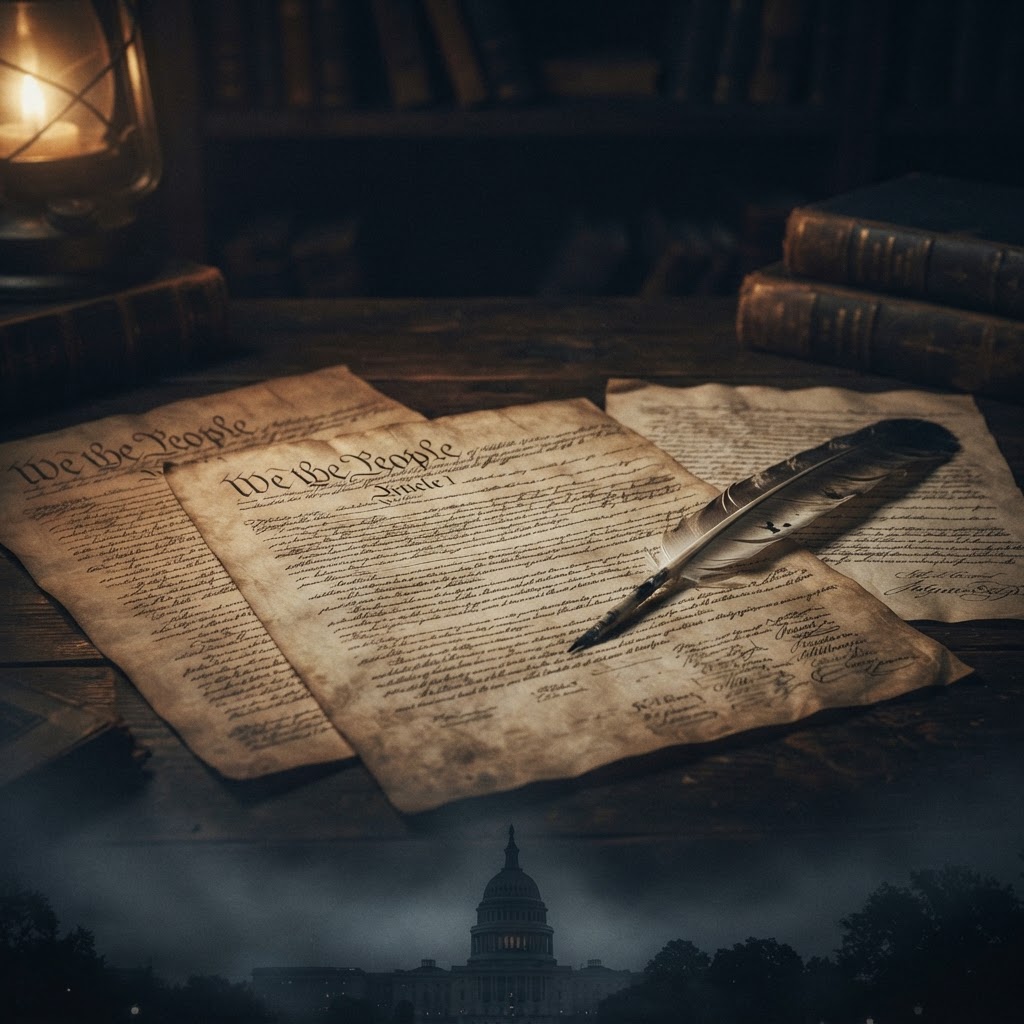
The American Idea
Self-government requires
prepared citizens.
For nearly two centuries, American educators and civic leaders have wrestled with the same question:
How do we prepare young people for the responsibilities they will inherit as citizens?
The Historical Thread
One conversation, across generations.
Prepare Before Responsibility
In a republic, political authority ultimately belongs to the people. Education therefore has a role in preparing future citizens to understand the institutions and responsibilities they will inherit.
The WVLC Parallel
Preparation begins before responsibility arrives.
Start at age 14.
Teach Students to Think, Not Simply Memorize
Civic education should go beyond the machinery of government. Students should examine real public questions, encounter competing arguments, and develop independent judgment.
To vote right requires a happy union of head and heart.
The WVLC Parallel
Research. Examine. Question. Defend.
Students are not told what position to adopt.
Democracy Must Be Experienced
Democratic education involves participation, communication, cooperation, and shared experience — not simply learning facts about government.
More than a form of government.
The WVLC Parallel
Citizenship becomes something students practice rather than merely study.
Citizenship Requires Practice
Schools can provide an environment where young people develop responsibility, cooperation, courage, and the habits required for participation in democratic society.
The WVLC Parallel
Learning moves beyond knowledge toward responsibility and service.
Knowledge Must Lead Toward Participation
Modern civic education should be engaging, relevant, nonpartisan, and prepare young people to participate constructively in self-government.
We must arm today's young people with innovative civic education that is relevant to them.
The WVLC Parallel
Knowledge → Engagement → Problem Solving → Participation
The Convergence
Across two centuries, the same principles kept returning.
Preparation
Constitutional Knowledge
Independent Thought
Research
Dialogue
Participation
Responsibility
Service
2026
West Virginia Leadership Corps
What if we turned those principles into a four-year journey?
The WVLC Pipeline
Four years of high school. One continuous ascent.
Age 14
Begin
9th Grade
Discover
10th Grade
Research
11th Grade
Design
12th Grade
Review · Defend · Advance · Serve
Age 18
Candidate Ready
The Canonical Model
Discover
Research
Design
Review
Defend
Advance
Serve
Not
What to think
But
How to think responsibly about public problems
The Disciplines
·Research before deciding.
·Listen before responding.
·Disagree without attacking.
·Defend an idea with evidence.
·Change a position when evidence requires it.
·Understand constitutional boundaries.
·Serve before seeking recognition.
·Accept responsibility for the consequences of leadership.
WVLC Does Not Tell Students
- —which political party to support
- —which candidate to support
- —which ideology to adopt
- —how to vote
- —whether they should ever seek elected office
WVLC develops civic capability and preparation.
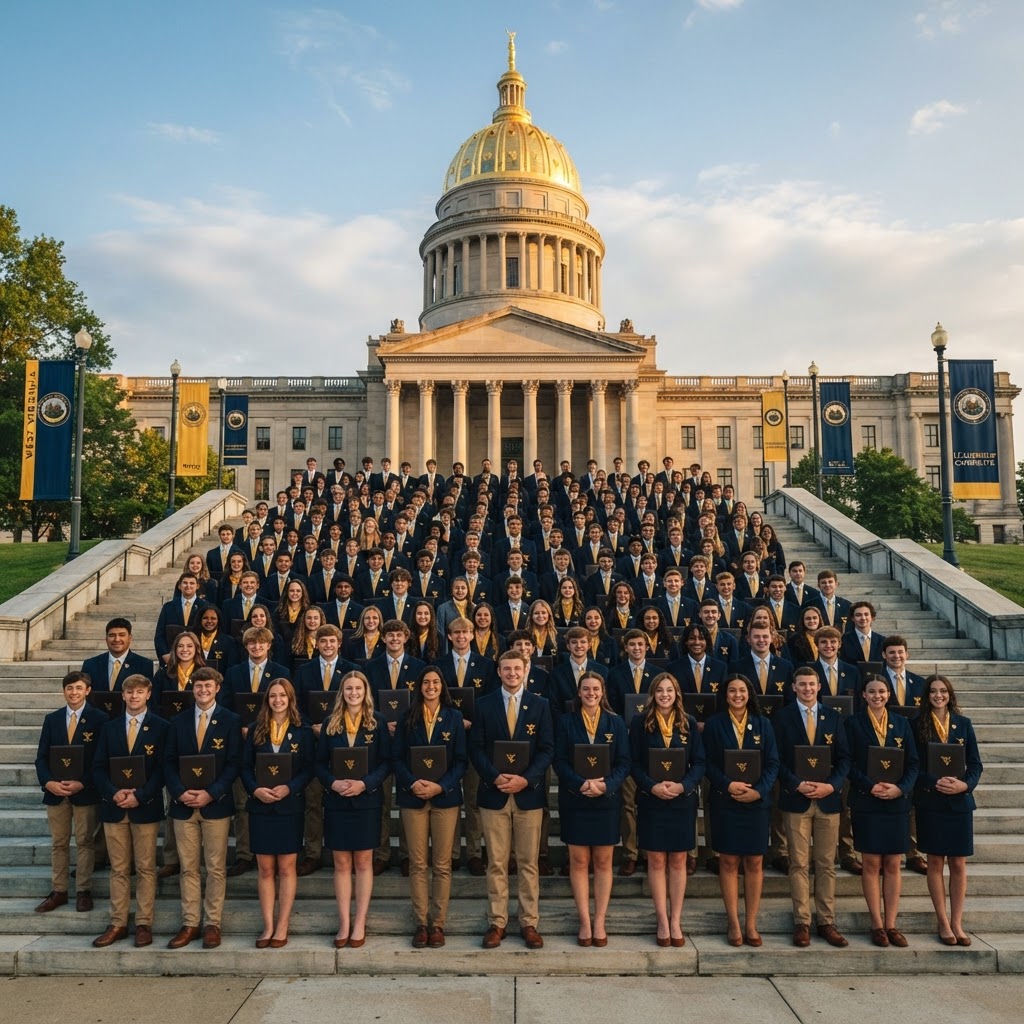
18 Years Old
Candidate Ready
Not a title. A standard.
Candidate Ready describes preparation — not political ambition. A WVLC graduate has practiced researching difficult questions, understanding constitutional boundaries, considering competing perspectives, communicating across disagreement, defending ideas with evidence, revising conclusions when necessary, and serving a community.
Candidate Ready does not mean a student must become a candidate. It means that by adulthood, the student has developed capabilities worthy of someone entrusted with the responsibilities of citizenship and public leadership.
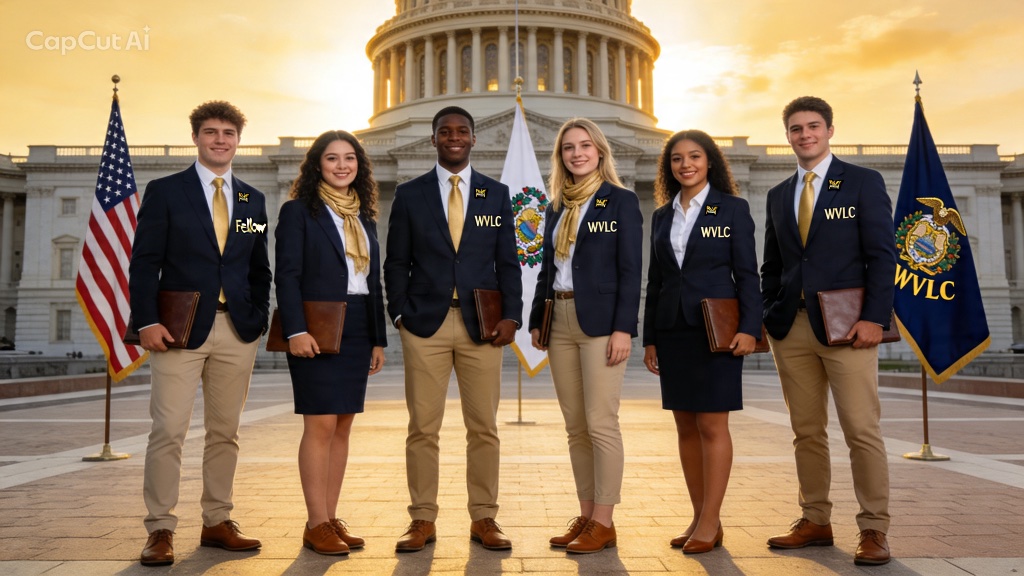
The American Idea
WVLC did not invent the idea that young Americans should be prepared for self-government.
We are building a four-year system for putting that idea into practice.
Start at age 14.
18 years old — Candidate Ready.
55 Counties. 55 Problems. 55 Opportunities.
Limitless solutions.
Sources & Further Reading
Horace Mann — Twelfth Annual Report of the Board of Education of Massachusetts (1848)
On the role of education in preparing citizens for self-government.
S. E. Forman — Civic education writings, early 1900s
On teaching students to think independently about public questions.
John Dewey — Democracy and Education (1916)
On democracy as a mode of associated living, not only a form of government.
Eleanor Roosevelt — Civic education writings, mid-20th century
On the practice of citizenship and the habits of democratic participation.
Sandra Day O'Connor — Civic education advocacy, 2009–2018
On engaging, relevant, nonpartisan civic education for young people.
Historical figures are presented for their documented ideas on civic education. WVLC claims no endorsement, past or present, from any individual or institution referenced above.