The WVLC Model
From Community Problem
to Legislative Proposal
A community problem does not become a serious legislative proposal in one classroom assignment.
It requires evidence. Constitutional authority. Research. Judgment. Design. Review. And the ability to defend the result.
WVLC gives students a disciplined process for doing exactly that.
Discover
Year One — Foundation
What problem deserves our attention?
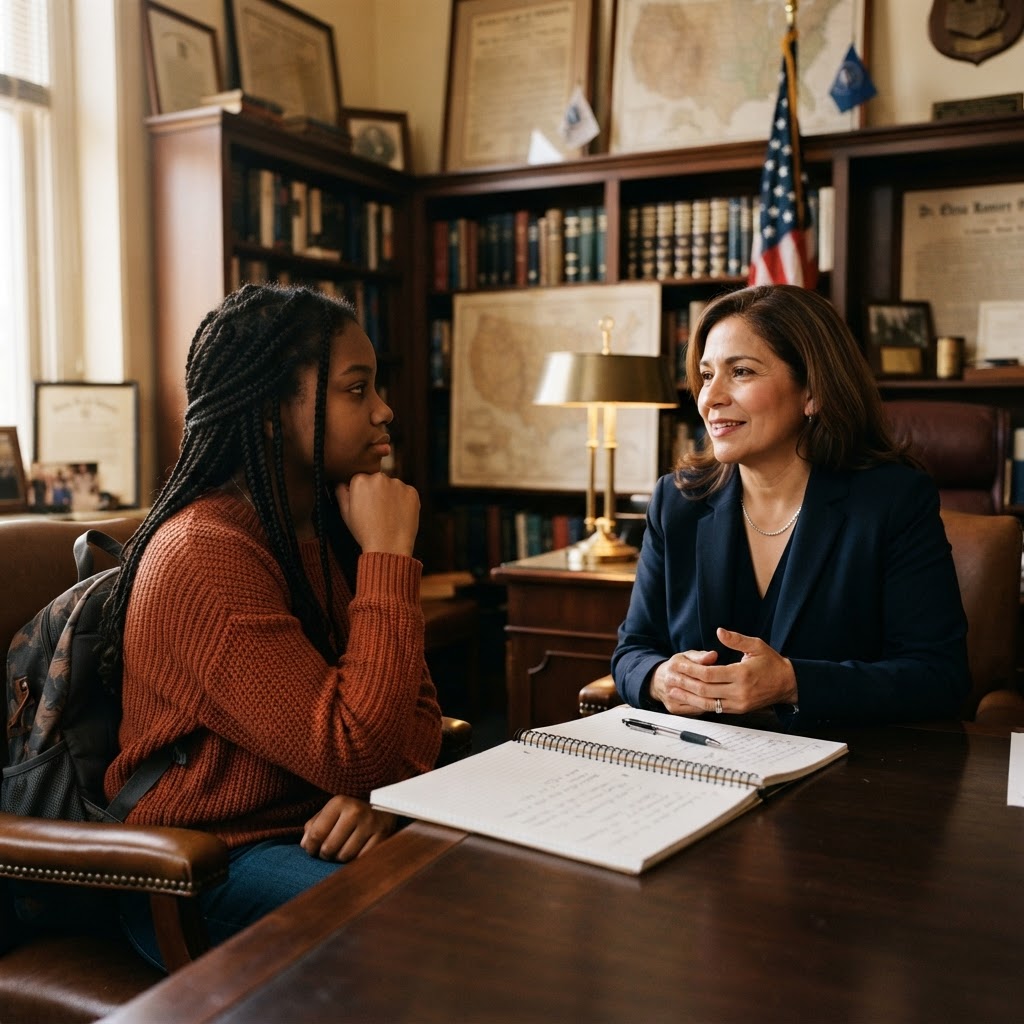
Students begin with their communities rather than with predetermined political issues.
They listen, observe, interview, investigate, and identify problems affecting people in their county.
The objective is not to find the most dramatic issue. It is to find a real problem worthy of serious investigation.
The Narrowing Process
Community Input
Initial Investigation
Validation
Problem Selection
Final County Problem Statement
Required Outcome
A researched, defensible community problem statement.
Research
Year Two — Constitutional Scholar
What do we need to know before proposing a solution?
Students investigate the problem from every angle before any solution is considered.
Identifying a problem does not automatically mean government has unlimited authority to solve it. Constitutional reasoning is central here.
Students investigate
- Evidence and data
- History of the problem
- Affected stakeholders
- Existing laws and policies
- Previous attempts to address it
- Relevant local, state, and federal authority
Constitutional Authority
- West Virginia Constitution where applicable
- United States Constitution where applicable
- Which level of government actually has jurisdiction
Required Outcome
An evidence base and constitutional/governmental foundation for action.
Design
Year Three — Civic Leadership
What solution should we build?
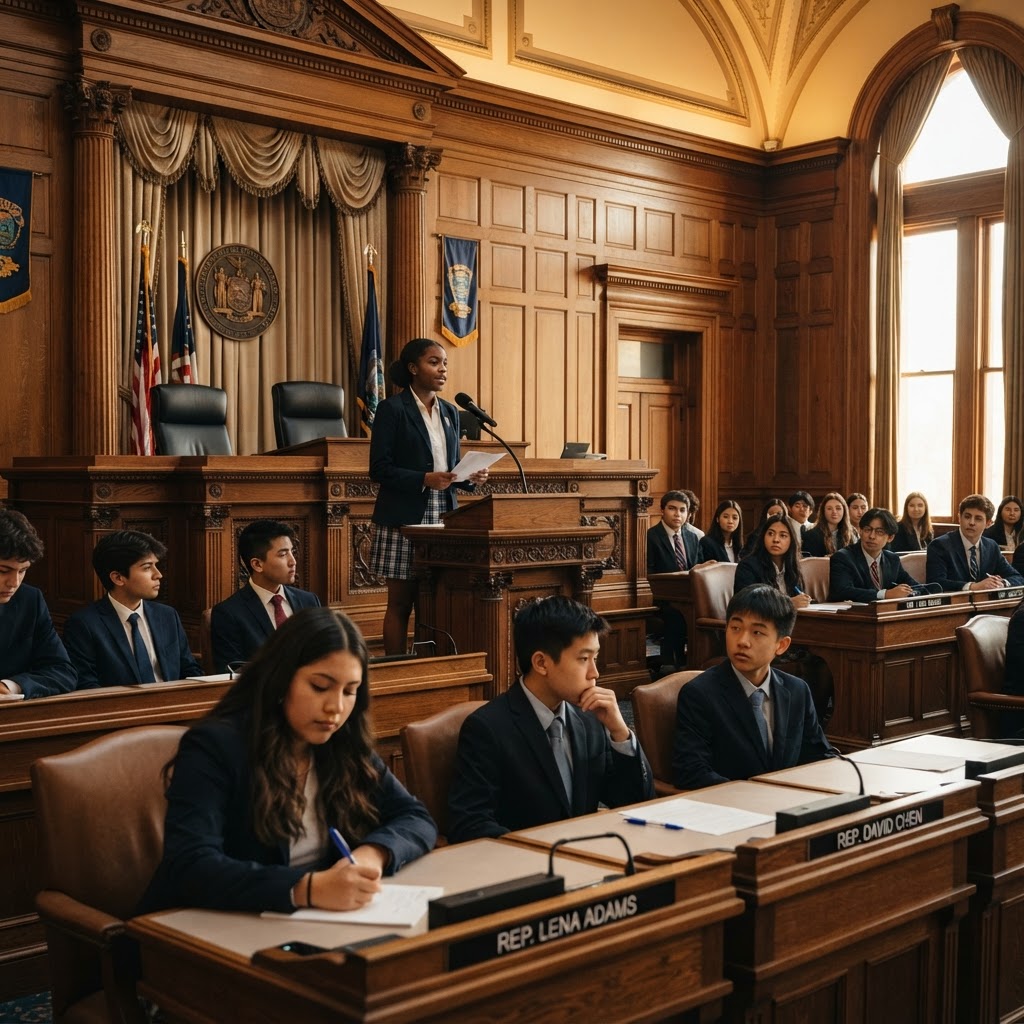
Students move from analysis into construction, developing a proposed response that addresses the verified problem while respecting the authority and constraints identified during research.
A good intention is not yet a good policy.
Tested for
- Practical implementation
- Responsible use of government authority
- Affected stakeholders
- Likely benefits
- Potential costs
- Unintended consequences
- Existing systems or laws it would affect
Required Outcome
A developed legislative solution ready for serious review.
Review
Can the solution survive scrutiny?
The proposal is challenged before students are allowed to advance it. This is a critical quality gate.
The Proposal Under Examination
Review is not designed to make every proposal survive. Learning that an idea does not withstand scrutiny is also a successful educational outcome.
Required Outcome
A revised proposal capable of moving to public defense.
Defend
The Candidate Ready standard
Can I defend this solution before others?
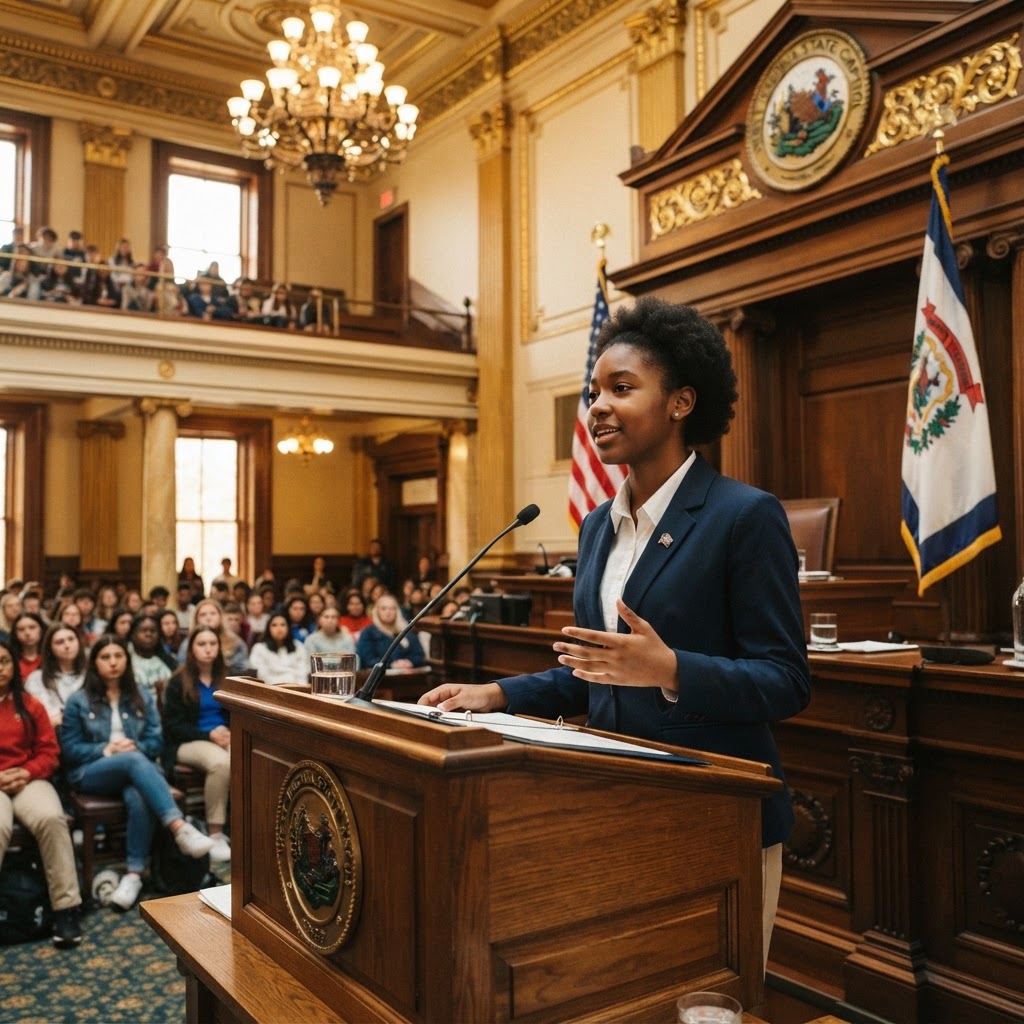
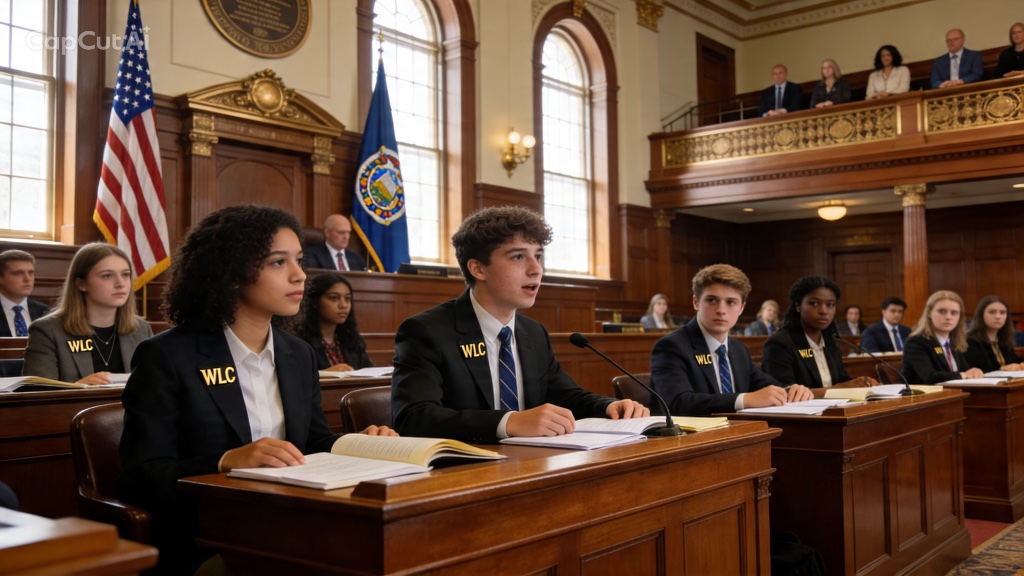
Students must be able to explain
01Here is the problem.
02Here is the evidence.
03Here is who has authority.
04Here is our proposed solution.
05Here is why we believe it can work.
06Here are the strongest objections.
07Here is our response.
The emphasis is not performance for performance's sake. It is intellectual ownership — understanding the work deeply enough to defend it before people who did not help create it.
Potential Settings
School and community presentations · County-level review · Civic leaders and mentors · WVLC review panels · Statewide presentation
Required Outcome
A complete legislative proposal that is researched, constitutionally grounded, and publicly defensible.
Advance
Where does strong student work go next?
WVLC creates a legitimate bridge between serious student work and the institutions capable of considering it.
The Statewide Pathway
55 Counties
55 Legislative Proposals
State Summit
Review Panel
Strongest Solutions Advance
Legislative Consideration
Prepared for the real legislative process.
WVLC does not pass bills. Until formal legislative introduction, student work is a County Legislative Proposal — a serious proposal capable of entering legitimate review and legislative consideration.
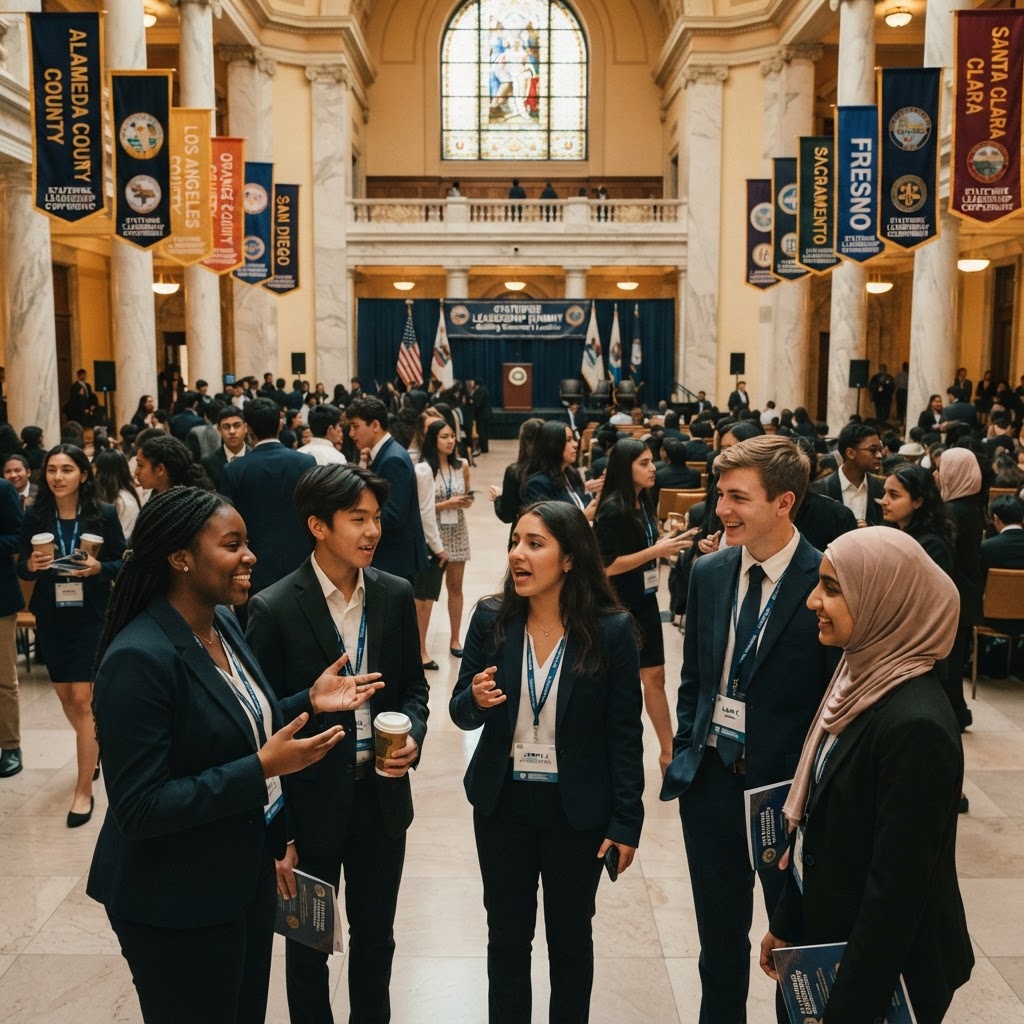
Required Outcome
Student work prepared to enter legitimate review and legislative consideration.
Serve
What is the purpose of all this?
The final lesson is larger than a proposal. Students leave understanding that public leadership is service.
Success is not defined only by whether a proposal advances. A proposal may advance, be revised, be rejected, be absorbed into another solution, influence future policy, or reveal that government action is not the appropriate answer. All of those can produce learning.
The objective is to develop citizens capable of approaching public problems with knowledge, character, humility, evidence, and responsibility.
The WVLC Principle
Citizenship before partisanship.
Service before status.
Leadership before office.
Required Outcome
Citizens prepared to serve — whatever the outcome of any single proposal.
The Quality Logic
The test every proposal must pass
A student should be able to answer: What is the problem? What evidence proves it? Who has authority to act? What is the proposed solution? Can I defend it?
Relationship to the Four Years
The model across the student's development
9th
Discover
Find the right problem.
10th
Research
Establish the evidence and authority.
11th
Design
Build and review the solution.
12th
Defend
Prove the work can stand.
Advance and Serve represent what the completed work and the developed student are prepared to do beyond the classroom process.
The model serves the student's development.